

How to tell if your dog is in pain? You know, dogs do not always cry, whine, or limp when they are in pain. In many senior dogs, discomfort first appears as a small change in everyday life. Your dog may take longer to stand up, stop following you around the house, sleep less comfortably, or become reluctant to climb stairs.
No single behavior proves that a dog is in pain. Veterinarians look for a pattern of changes and compare the dog’s current behavior with what is normal for that individual dog.
If your older dog seems to be slowing down, do not automatically assume it is simply old age. Osteoarthritis, spinal disease, dental problems, nerve disorders, cancer, and other medical conditions can affect comfort, movement, sleep, and quality of life.
Table of Contents
How to tell if your dog is in pain at home?
The most useful clue is often not one specific behavior, but a change from your dog’s normal routine.
A dog that once greeted you at the door may begin watching from their bed. A dog that happily jumped into the car may pause and wait for help. Another dog may continue walking without an obvious limp but become restless at night or move away when touched around the hips.
These changes can happen gradually. Pet owners may adjust their routines around the dog without realizing that an underlying problem is progressing. You may begin lifting your dog into the car, placing food closer to their bed, or avoiding longer walks. These changes are helpful, but they may also hide how much your dog’s mobility has declined.
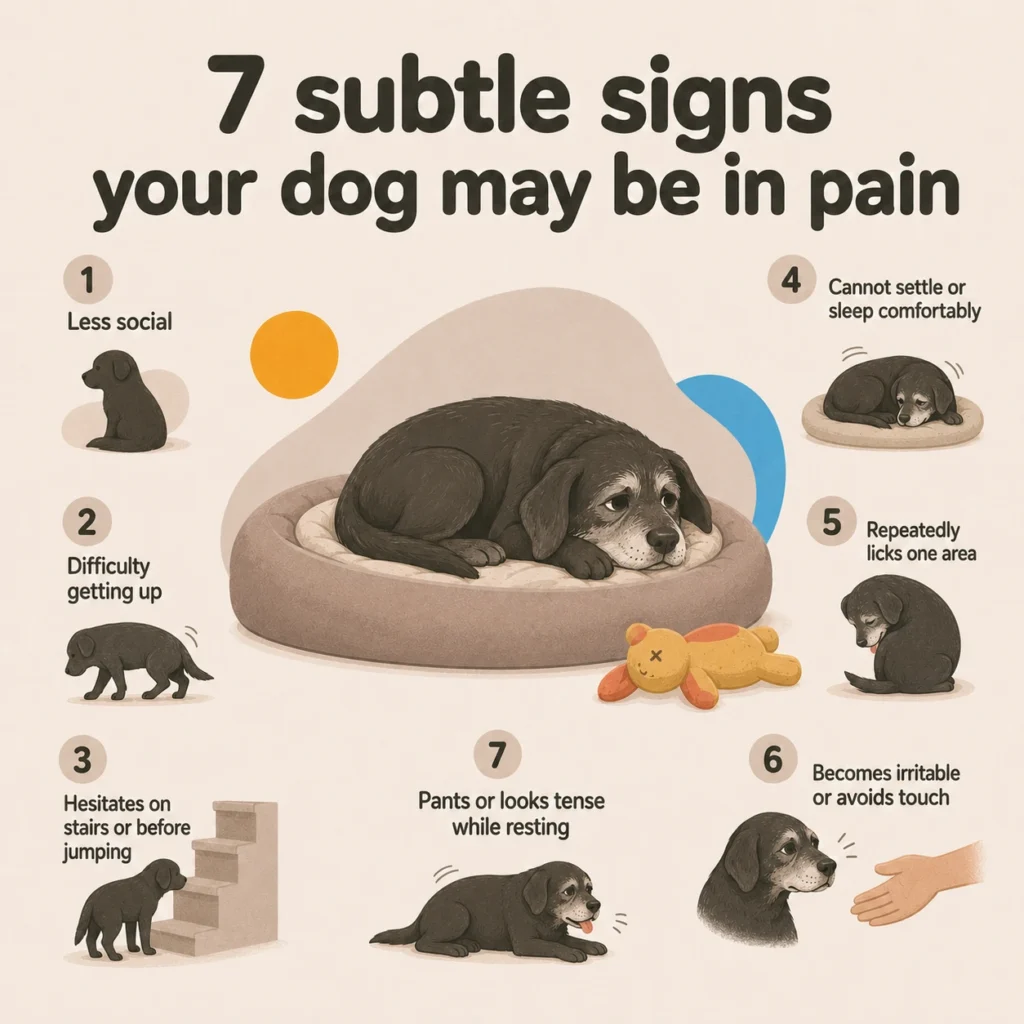
The following seven signs do not confirm pain on their own. However, they are important reasons to observe your dog more closely and arrange a veterinary examination if the changes persist.
The AAHA senior care guidelines also emphasize the importance of recognizing pain-related changes in mobility, behavior, and quality of life.
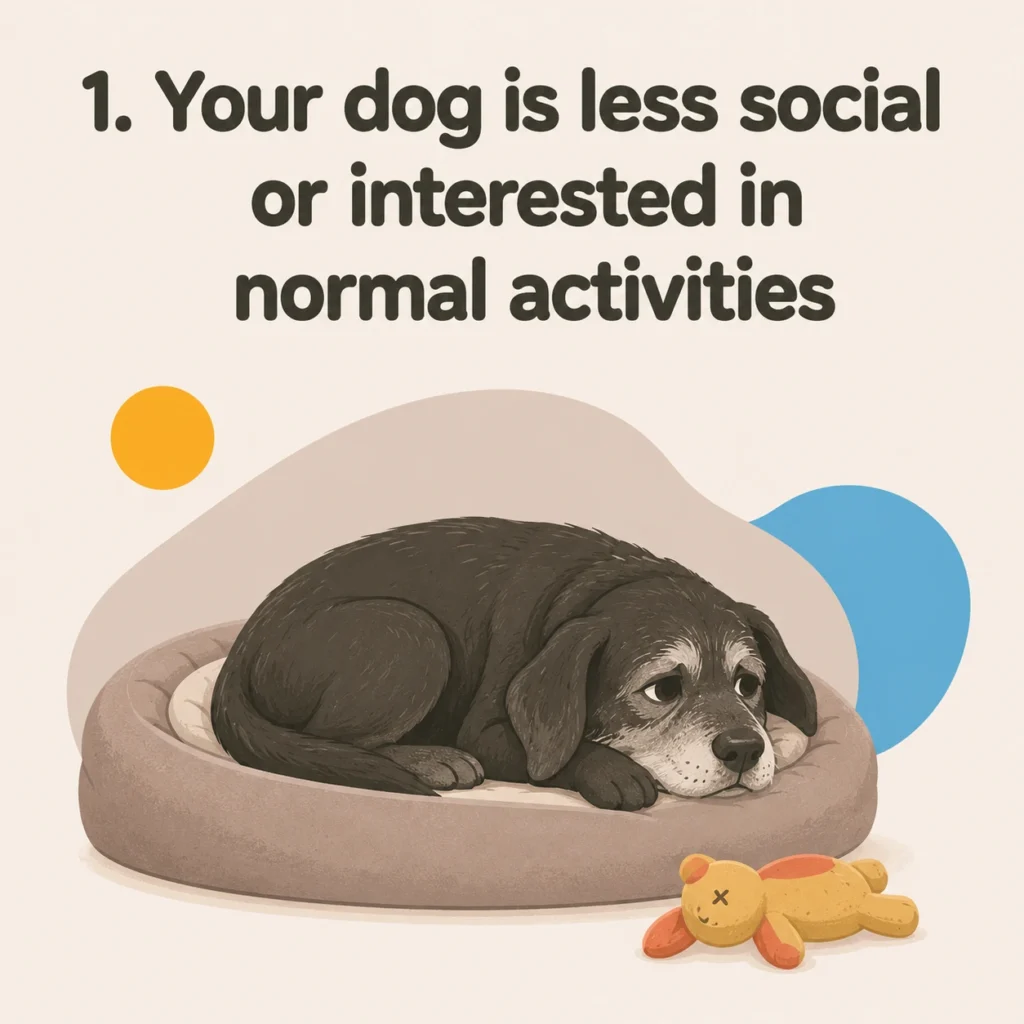
1. Your dog is less social or interested in normal activities
A change in social behavior can be one of the earliest signs that a dog is uncomfortable.
A dog that previously followed family members, brought toys, greeted visitors, or asked to go outside may begin spending more time alone. Your dog may still look at you or wag their tail but choose not to stand up.
This does not necessarily mean your dog has become less affectionate. Standing for a long time, walking across the room, or being bumped by another pet may have become uncomfortable.
You may notice that your dog no longer greets you at the door, loses interest in toys, avoids other pets, or remains in bed during activities they previously enjoyed.
Reduced interaction can also occur with hearing loss, vision loss, heart disease, cognitive decline, and other medical problems. The change matters most when it is new, gradually worsening, or accompanied by changes in movement or sleep.
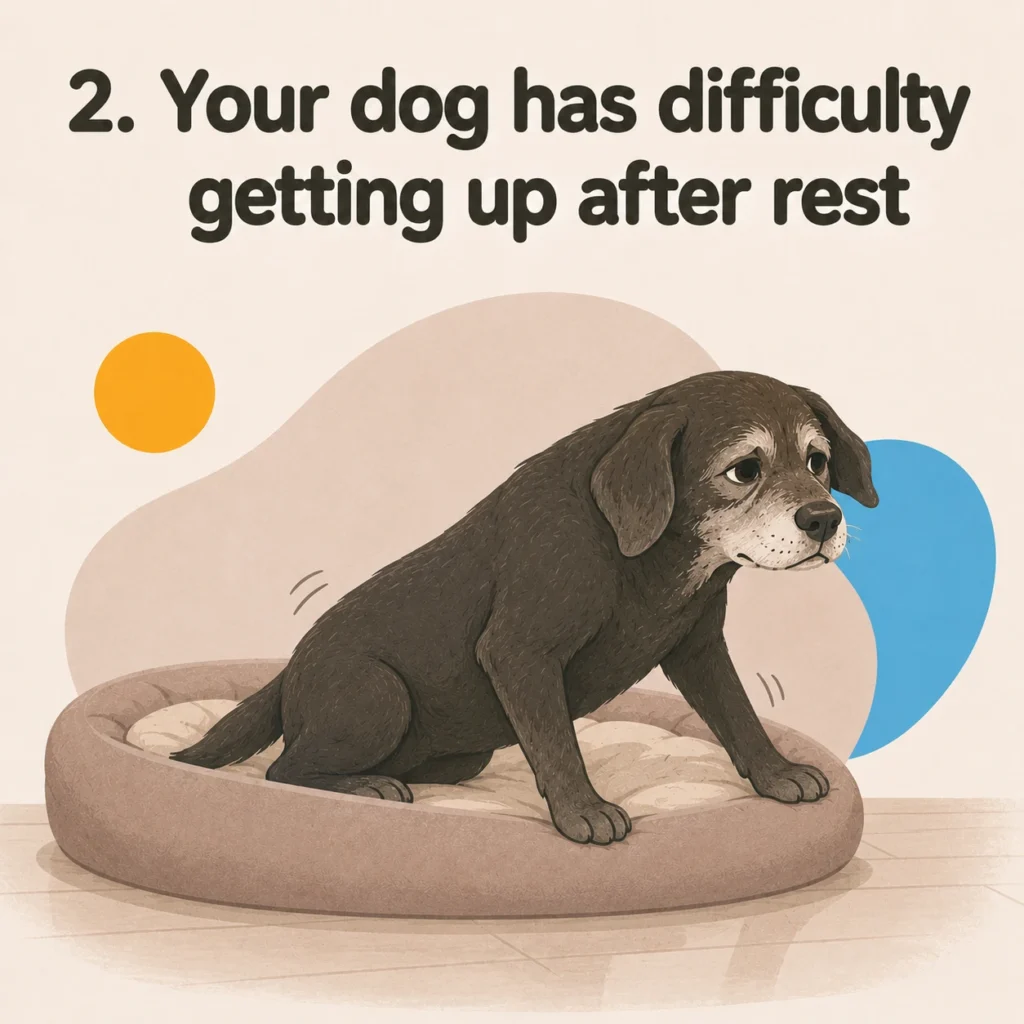
2. Your dog has difficulty getting up after rest
Difficulty standing after sleeping is a common sign of joint, muscle, or spinal discomfort.
Your dog may need several attempts to rise, push up mainly with the front legs, or walk with short and stiff steps during the first few minutes. Some dogs appear to improve after moving around, but this does not mean they are pain-free.
A dog that seems to “walk it off” may still have osteoarthritis or another chronic condition. The first movements after rest may simply reveal the problem more clearly.
Pay attention to how your dog stands up, lies down, and shifts position. Slipping on tile or wooden flooring may also become more common because pain, weakness, or reduced joint control makes these surfaces harder to manage.
A short video of your dog getting up after sleep can help your veterinarian assess these changes. Dogs may move differently in the clinic because excitement or stress temporarily changes their behavior.
3. Your dog hesitates before using stairs or jumping
Changes in familiar activities may be more noticeable than obvious limping.
A dog may pause at the bottom of the stairs, climb one step at a time, refuse to jump into the car, or wait for help before getting onto a sofa. Some dogs begin taking longer routes through the house to avoid a step or slippery area.
These behaviors may be related to painful joints, spinal discomfort, reduced muscle strength, or neurological disease.
You may also notice wider turns, slower movement on slopes, reluctance to jump down, or difficulty maintaining balance on smooth floors.
Dragging the toes, wearing down the nails unevenly, crossing the legs, placing the top of the paw on the ground, or developing progressive weakness should be assessed promptly. These signs may suggest a neurological problem rather than uncomplicated age-related stiffness.
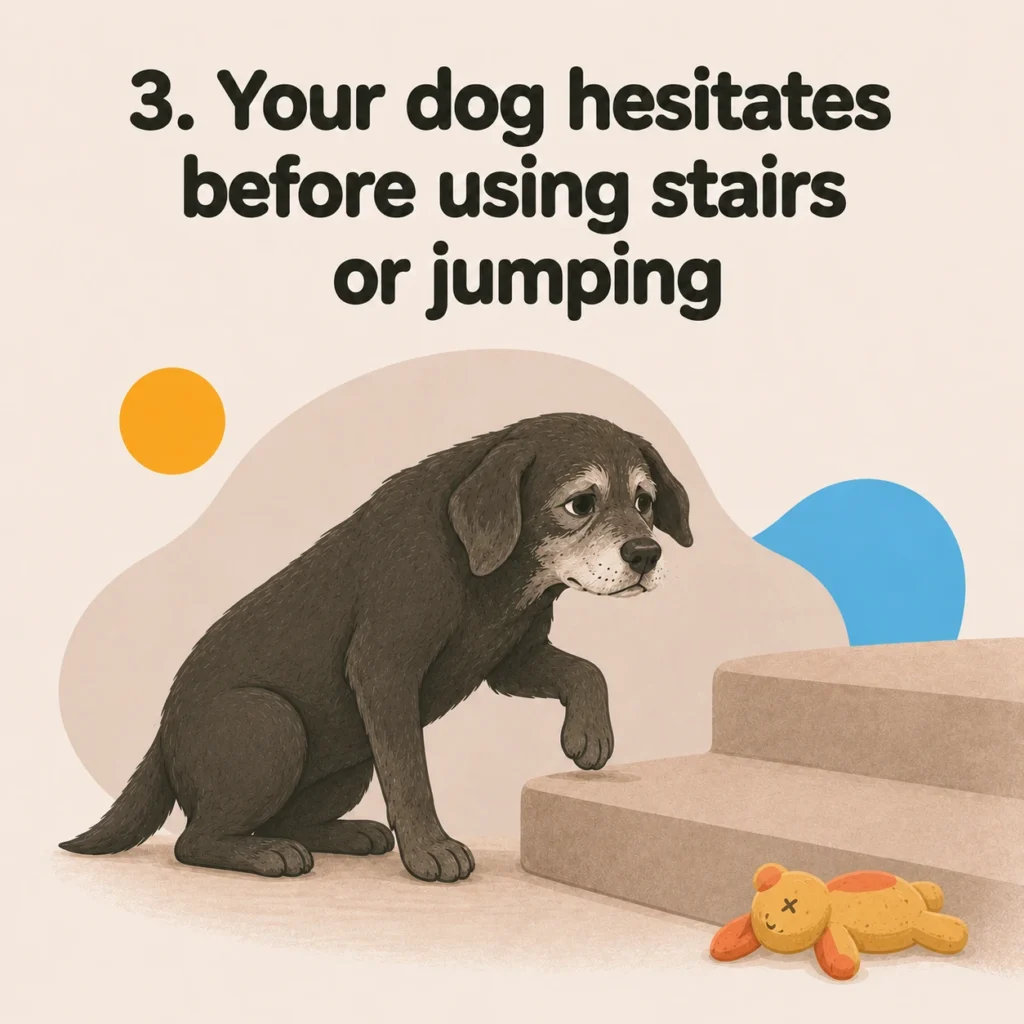
4. Your dog cannot settle or sleep comfortably
Pain can make it difficult for a dog to find a comfortable resting position.
Your dog may stand up, circle the bed, lie down, and then repeat the process several times. Some dogs wake frequently during the night or begin sleeping in different places around the house.
A senior dog may also sleep more during the day because their nighttime sleep has become fragmented.
Nighttime restlessness is not always caused by pain. Canine cognitive dysfunction, anxiety, urinary problems, heart disease, respiratory disease, and some medications can create similar changes.
A new sleep problem should be considered together with your dog’s mobility, breathing, appetite, and behavior. If your dog also appears stiff, pants while resting, or struggles to lie down, pain becomes a more important possibility.
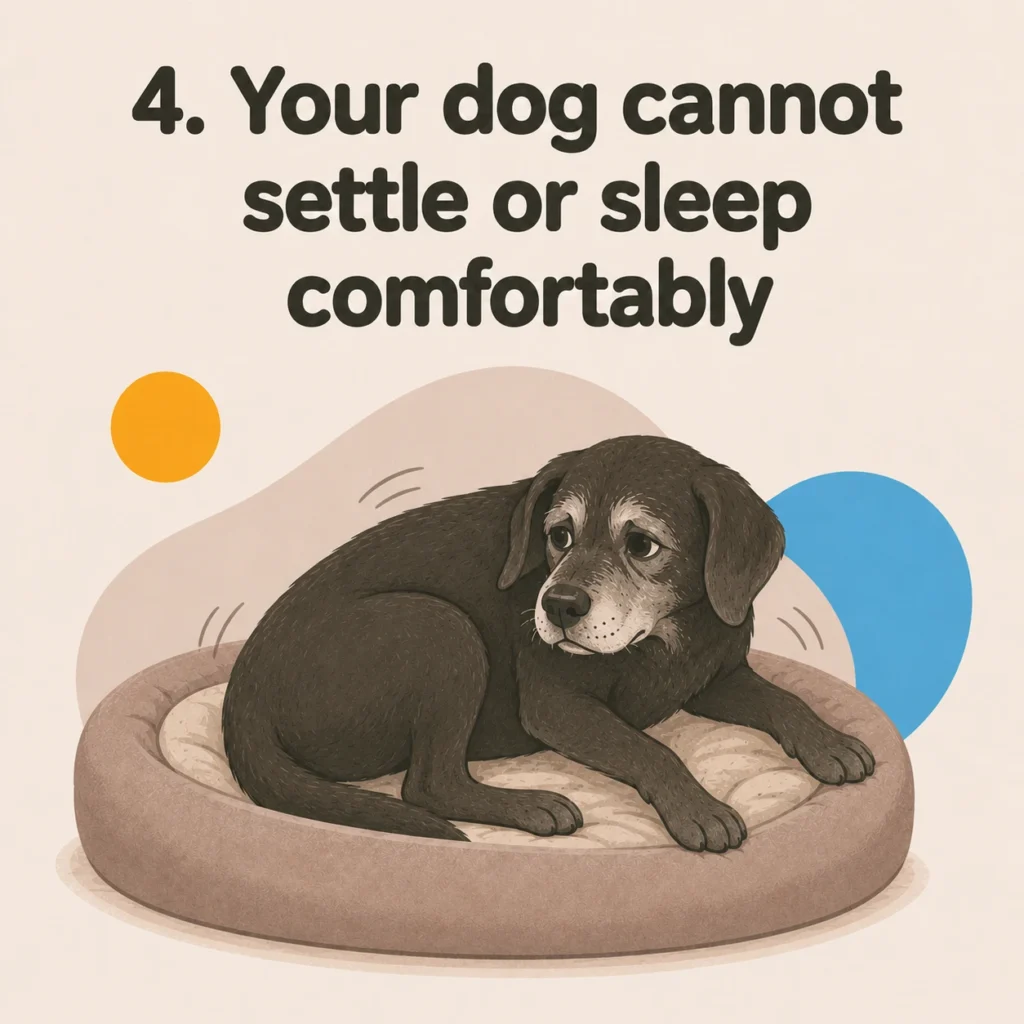
5. Your dog repeatedly licks or chews one area
Repeated licking of one joint, limb, paw, or area of the body may be a response to discomfort.
Over time, the hair may become stained, thin, or absent. The skin may also become red, moist, or thickened.
However, licking does not automatically mean that a dog has joint pain. Allergies, skin infections, parasites, foreign material between the toes, anxiety, and compulsive behavior can cause the same sign.
For this reason, the veterinarian may need to examine the skin, nails, paws, joints, muscles, and nervous system before identifying the cause.
Do not apply human pain-relief creams or gels to the area. Some topical medications can be dangerous if your dog licks and swallows them.
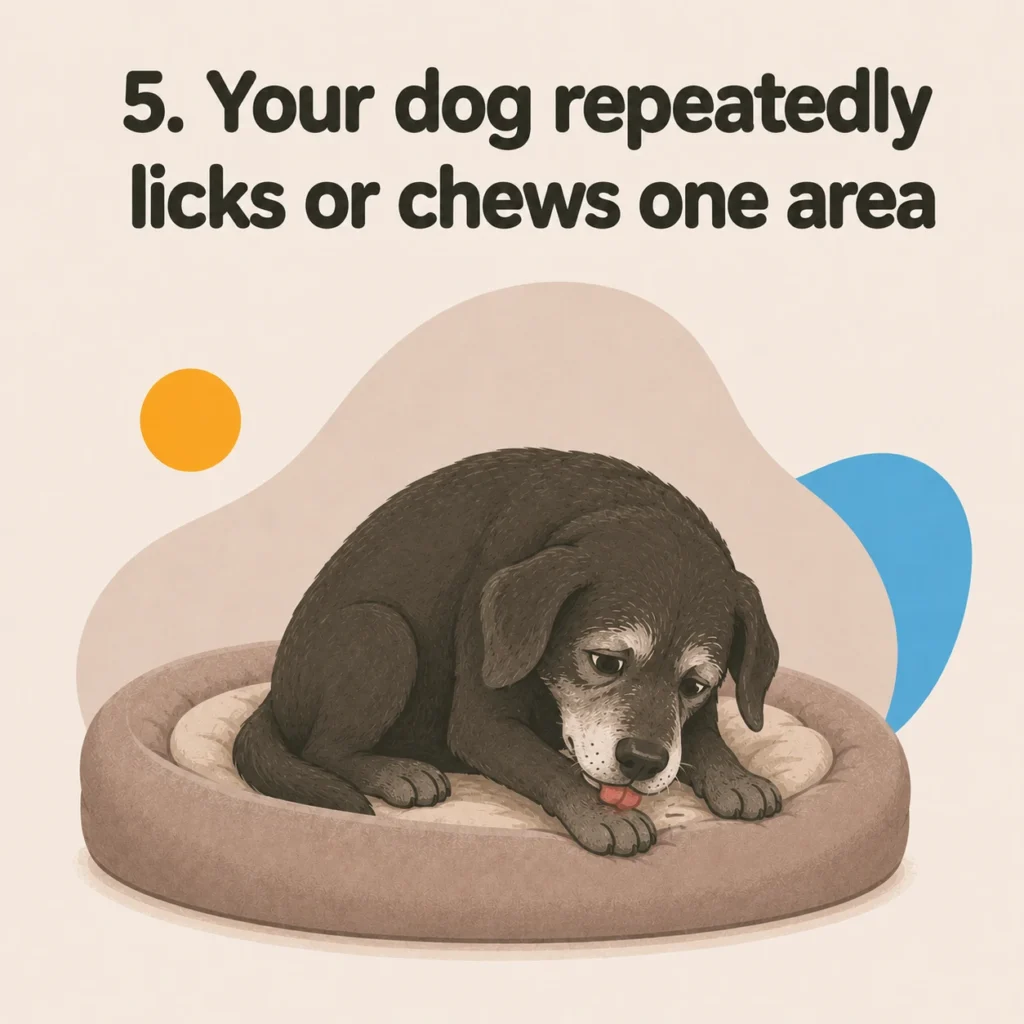
6. Your dog becomes irritable or avoids being touched
Pain may change the way a dog responds to handling.
A normally gentle dog may move away, turn their head, become tense, growl, snap, or attempt to bite when someone touches a painful area. This is often a protective response rather than a training problem.
Your dog may react when being lifted, brushed, fitted with a harness, helped into the car, or touched around the neck, back, hips, or legs.
A dog that suddenly dislikes being handled has not necessarily become aggressive. The dog may be trying to prevent an action that previously caused discomfort.
Do not punish growling. Growling is an important warning that the dog is uncomfortable or frightened. Punishment may increase fear and remove the warning that comes before a bite.
Until your dog has been examined, keep handling gentle and prevent children from hugging, climbing on, or disturbing the dog while resting.
Behavioral changes in senior dogs may also be associated with hearing loss, vision loss, anxiety, neurological disease, or canine cognitive dysfunction. Pain should still be considered whenever irritability appears unexpectedly.
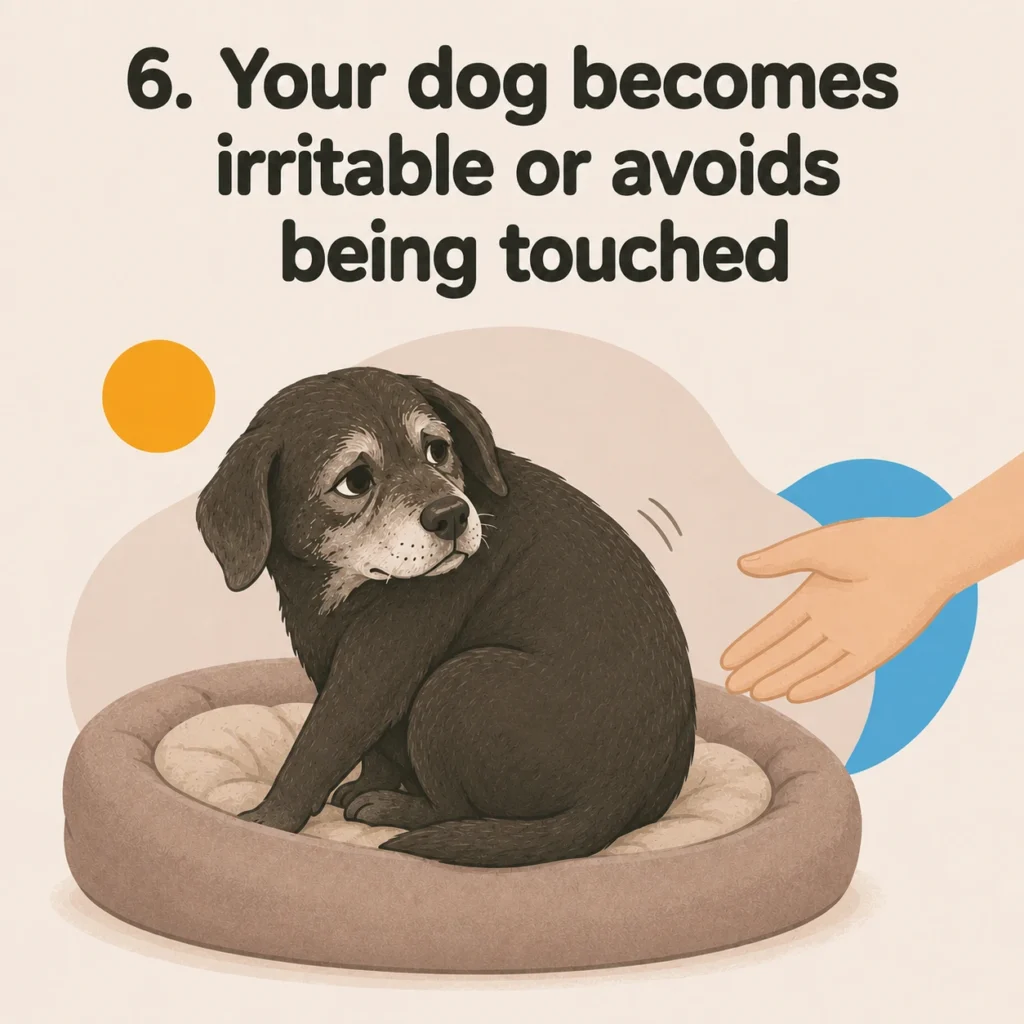
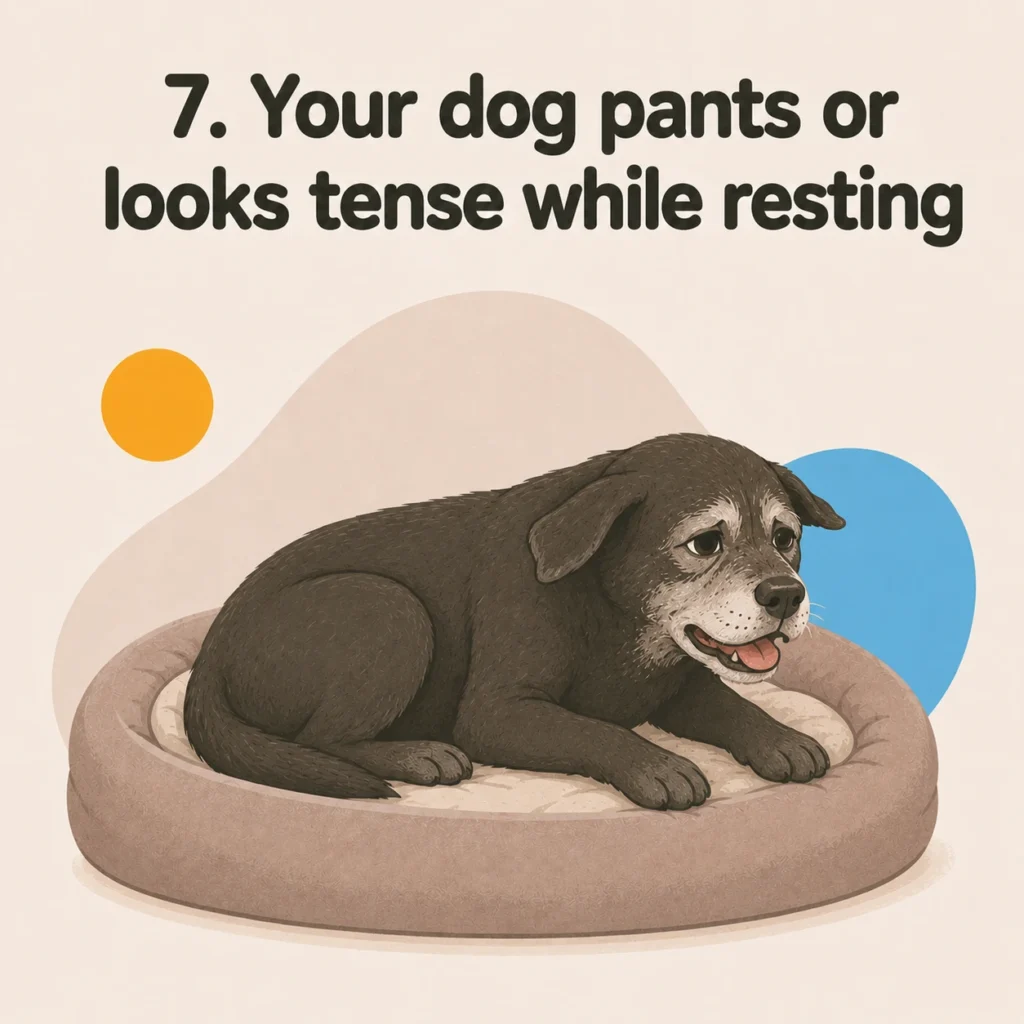
7. Your dog pants or looks tense while resting
Panting is normal after exercise, during warm weather, or when a dog is excited. Panting while resting in a cool environment is more difficult to explain.
A dog experiencing discomfort may pant, tremble, keep the ears pulled back, narrow the eyes, hold the mouth tightly closed, or appear unable to relax. Some dogs repeatedly get up and lie down because no position feels comfortable.
These signs may indicate pain or stress, but they are not specific to pain. Heart disease, lung disease, anemia, fever, hormonal disorders, anxiety, and medication effects can also cause panting or rapid breathing.
The situation matters. Panting after a walk is different from panting while lying still in an air-conditioned room.
Seek urgent veterinary care if panting is accompanied by difficulty breathing, pale or blue gums, collapse, marked weakness, or an inability to settle.
What should you record before the veterinary visit?
Observations from home can be extremely valuable because dogs may behave differently at the clinic.
Before the appointment, record short videos of your dog getting up after sleep, walking toward and away from the camera, turning in both directions, using a familiar step, and lying down.
You can also keep notes about sleep, appetite, willingness to walk, sensitivity to touch, use of stairs, and the number of good and bad days.
Do not force your dog to perform an activity that appears painful simply to record it.
How is chronic pain managed in senior dogs?
Chronic pain is rarely managed with one treatment alone.
Depending on the diagnosis, age, mobility, and other medical conditions, a veterinarian may combine prescription medication with weight management, appropriate exercise, physical rehabilitation, nutritional support, and changes to the home environment.
This approach is known as multimodal pain management. The goal is not only to lower a pain score, but to help the dog stand, walk, sleep, interact, and participate in normal daily activities more comfortably.
Home modifications can also make a meaningful difference. Non-slip rugs can improve confidence on smooth floors. A ramp can reduce the need to jump into a car. A supportive bed may make resting and getting up easier. Short, regular walks may be more manageable than occasional long outings.
Treatment must be individualized. A medication that is suitable for one dog may be unsafe for another dog with kidney, liver, gastrointestinal, or neurological disease.
Never give human pain medication without veterinary guidance. Ibuprofen, naproxen, diclofenac, and several other common products can cause severe or fatal poisoning in dogs.
When should you contact a veterinarian?
Arrange a veterinary examination when changes in movement, sleep, behavior, or daily activity persist, recur, or gradually worsen.
More urgent care is needed if your dog:
- Suddenly cannot stand or refuses to bear weight
- Drags a limb or develops progressive weakness
- Cries out or appears to be in severe pain
- Cannot urinate or pass stool normally
- Stops eating and becomes markedly lethargic
- Has difficulty breathing, collapses, or becomes unresponsive
Recognizing pain early may help preserve your dog’s mobility, independence, social interaction, and quality of life.
Final takeaway
The earliest sign of pain is often not an obvious limp or cry. It may simply be that your dog no longer does something they once enjoyed.
A senior dog that stops greeting the family, avoids stairs, sleeps restlessly, or becomes sensitive to touch may be experiencing discomfort rather than simply getting old.
You know your dog’s normal behavior better than anyone. When that behavior begins to change, record what you see and discuss it with your veterinarian.
Frequently asked questions
Can a dog be in pain without crying?
Yes. Dogs with chronic pain may become quieter, less active, restless, or reluctant to move without crying or whining. The absence of vocalization does not mean that the dog is comfortable.
Why is my senior dog suddenly slowing down?
Slowing down may be associated with arthritis, spinal disease, muscle weakness, heart disease, neurological problems, cognitive decline, or another medical condition. It should not automatically be attributed to age.
Can I give my dog human pain medication?
No. Many human pain medications are toxic to dogs. Only use medication prescribed or specifically recommended by a veterinarian for that individual dog.
What should I record for my veterinarian?
Record your dog getting up, walking, turning, using stairs, and lying down. Notes about sleep, appetite, activity, sensitivity to touch, and good or bad days can also help.
Are you a veterinarian? Use the HelloVet veterinary drug reference to search for drug information and dosage guidance.
For pet owners: Never give your dog medication without veterinary guidance.