
Dog licking paws is common, but frequent or intense licking usually means something is irritating, painful or uncomfortable. A dog may lick one paw because of a small injury, or several paws because of allergies, infection or another wider health problem.
The most useful clue is not simply that your dog is licking. Look at which paws are affected, how often it happens and whether the skin is red, swollen, smelly or sore. Persistent dog licking paws can damage the skin barrier, keep the area damp and make secondary infection more likely.
This guide explains seven common causes, what you can safely check at home and when your dog needs veterinary care.
Table of Contents
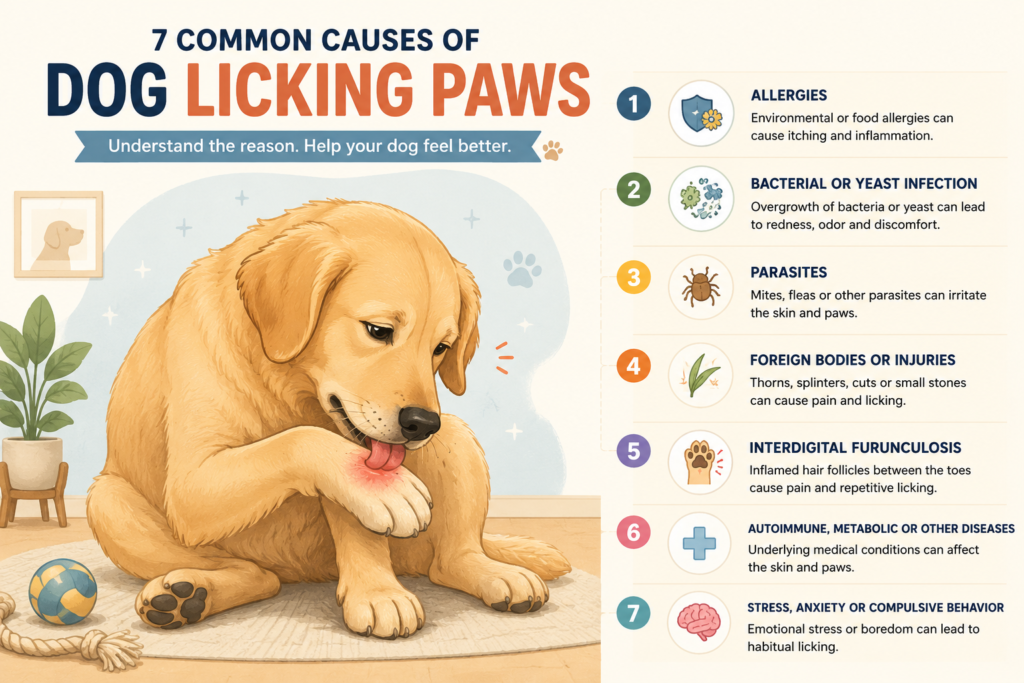
The most common reasons include allergies, bacterial or yeast infection, parasites, foreign bodies, environmental irritation, painful paw conditions and stress-related behaviour.
Dog licking paws should be checked promptly when it begins suddenly, focuses on one paw, causes bleeding or is accompanied by swelling, limping, discharge or a strong smell.
1. Allergies
Allergies are one of the most common causes of dog licking paws, especially when several feet are affected and the problem keeps returning.
Environmental allergies may involve pollen, grass, mould or house dust mites. Dogs with canine atopic dermatitis often lick or chew their front paws and may also have itchy ears, face, armpits or abdomen. The skin can look normal at first, even when the dog is already very itchy.
Food allergy can cause similar signs. Some affected dogs develop recurring paw irritation, ear infections or itching around the face and rear end.
A blood or saliva test cannot reliably confirm food allergy. The accepted approach is a properly controlled elimination diet trial followed by a food challenge under veterinary guidance.
Contact irritation can also occur after walking on freshly treated grass or surfaces exposed to cleaning chemicals. In these cases, dog licking paws may begin shortly after contact.
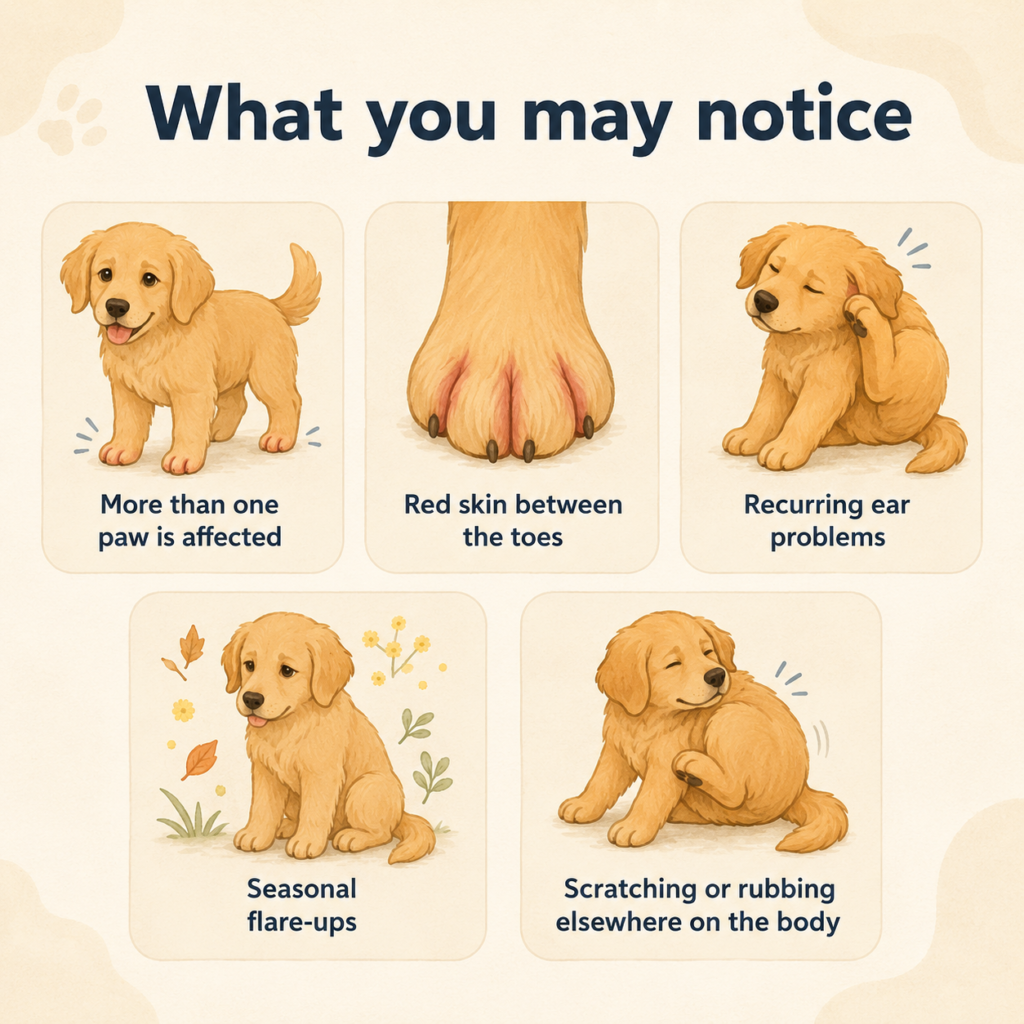
Allergy treatment depends on the trigger and may include skin care, parasite prevention, a controlled dietary trial or prescription anti-itch treatment. Repeatedly changing food without a structured plan can make the real cause harder to identify.
2. Bacterial or yeast infection
Repeated licking keeps the paws warm and moist. This weakens the skin barrier and creates conditions where bacteria and yeast can multiply.
Bacterial pododermatitis may cause redness, swelling, pustules, crusting or discharge. A deeper infection can become painful and may produce draining tracts between the toes.
Yeast overgrowth, often involving Malassezia pachydermatis, commonly causes greasy skin, brown staining and a musty or yeasty smell.
Infection is often secondary rather than the original problem. Allergies, parasites, injury or abnormal pressure on the feet may start the inflammation. The infection then makes dog licking paws more intense, creating a cycle of itching, licking and further skin damage.
Veterinarians commonly use skin cytology to look for bacteria and yeast. This helps them select treatment based on evidence rather than guesswork.
Current ISCAID guidelines for canine pyoderma also support careful antimicrobial use, particularly when resistant infection may be present.
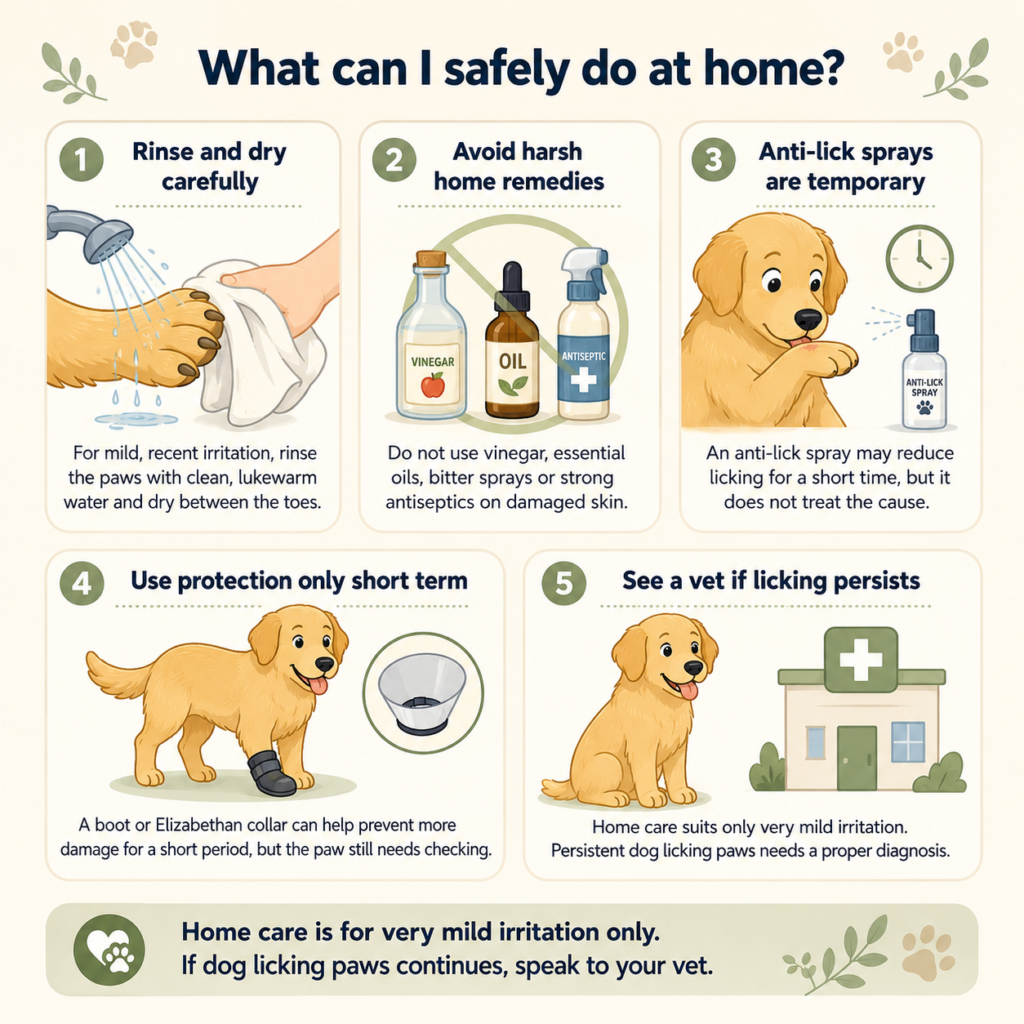
Do not apply leftover antibiotics, steroid creams or human antifungal products without advice. The wrong product can irritate the skin, hide important signs or contribute to antimicrobial resistance.
3. Parasites
Parasites should be considered when dog licking paws appears alongside itching, hair loss or skin changes elsewhere.
Demodex mites live inside hair follicles and can cause redness, scaling, hair loss and inflammation around the feet. Demodicosis is more common in young dogs, but it may also develop in adult dogs with an underlying condition affecting immune control.
Harvest mites can gather between the toes and cause intense itching, particularly after walks through grass during late summer or autumn.
Fleas usually cause stronger irritation around the lower back and tail base. However, a highly allergic dog may chew or lick several areas of the body, including the feet.
Parasite prevention history is useful, but no single product covers every possible parasite. A veterinarian may need to perform skin scrapings, hair examination or other tests before choosing treatment.
4. Foreign bodies, cuts and environmental irritation
When only one foot is affected, check for a local problem.
Grass awns, thorns, splinters, fragments of glass and small stones can become trapped between the toes or penetrate the skin. A foreign body may cause sudden dog licking paws, limping, swelling or a small wound that releases blood or pus.
Grass awns can move deeper into tissue. Repeatedly probing the area or trying to dig them out at home may cause further damage.
Hot pavement can burn paw pads. Ice, road salt and de-icing chemicals may cause dryness, cracking and irritation during colder weather. Household cleaning products may also irritate sensitive skin.
After a walk, gently check:
- Between each toe
- Around the nails
- The upper and lower surfaces of the paw
- The pads for cuts, blisters or cracks
- Whether one area is painful when lightly touched
A mildly dirty paw can be rinsed with clean, lukewarm water and dried carefully. Do not dig into wounds, pull deeply embedded material or apply essential oils.
Pain, swelling, discharge or continued licking should be assessed by a veterinarian.
5. Interdigital furunculosis and structural paw problems
Interdigital swellings are often called “interdigital cysts”, but many are inflamed or ruptured hair follicles rather than true cysts.
These lesions may appear as red, painful lumps between the toes. They can rupture and release blood or pus. Heavy dogs, dogs with altered foot structure and dogs placing abnormal pressure on certain parts of their paws may be more vulnerable.
Repeated friction can force hairs into the skin. Keratin released from damaged follicles then triggers a strong inflammatory reaction. Secondary infection may develop afterwards.
In these cases, dog licking paws is driven by both pain and inflammation.
Treatment varies. Some dogs need weight management, treatment of an underlying allergy, medication for infection or inflammation, and occasionally surgery or laser treatment for chronic lesions.
Simply covering the paw without treating the underlying cause often leads to recurrence.
6. Autoimmune, metabolic or other medical disease
Less common conditions can affect the paw pads, nails or skin around the feet.
Autoimmune diseases such as pemphigus foliaceus may cause crusting, pustules or thickened paw pads. Vasculitis can damage small blood vessels and create painful ulcers.
Hepatocutaneous syndrome can cause severe cracking and crusting of the paw pads, usually in dogs with significant underlying metabolic or liver-related disease.
These conditions are far less common than allergies or infection, but they should be considered when lesions are severe, unusual or fail to improve with routine treatment.
A dog may also show changes elsewhere, including facial crusting, poor appetite, weight loss, low energy or general illness.
Persistent dog licking paws combined with widespread pad damage, nail abnormalities or systemic signs needs a full veterinary examination rather than repeated home remedies.
7. Stress, boredom or compulsive licking
Some dogs lick as a coping behaviour when they are anxious, under-stimulated or unable to settle. However, behavioural causes should not be assumed until pain, itching and infection have been ruled out.
Acral lick dermatitis, also known as a lick granuloma, usually involves repeated licking of one reachable area, often on the lower front leg. Over time, the skin becomes thickened, hairless, inflamed and difficult to heal.
Licking may briefly soothe the dog, which reinforces the behaviour and makes it harder to stop.
Dog licking paws linked to stress may increase when the dog is left alone, after a household change or during long periods without exercise and activity. Even then, infection or pain may be present at the same time.
Management may involve treating the skin lesion, improving exercise and enrichment, changing the dog’s routine and addressing anxiety with a veterinarian or qualified behaviour professional.
What the pattern of licking may tell you
| Licking pattern | Possible explanation | What to do |
|---|---|---|
| One paw, sudden onset | Cut, thorn, grass awn, broken nail or sting | Inspect gently and seek care if painful or swollen |
| Several paws, recurring | Environmental or food allergy | Arrange veterinary assessment |
| Red, greasy or smelly paws | Yeast or bacterial infection | Cytology and targeted treatment may be needed |
| Painful lump between the toes | Interdigital furunculosis or foreign body | Veterinary examination recommended |
| Licking combined with limping | Injury, foreign body or deeper inflammation | Seek prompt assessment |
| Licking mainly during stressful situations | Behavioural component possible | Rule out medical causes first |
When should dog licking paws be seen by a vet?
Book a veterinary appointment when the licking lasts longer than a day or two, repeatedly returns or begins causing visible skin damage.
Seek care sooner if you notice:
- Limping or reluctance to walk
- Marked redness or swelling
- Bleeding, pus or a draining wound
- A broken nail or suspected foreign body
- A strong or unusual smell
- Blackened, blistered or severely cracked pads
- Facial swelling, breathing difficulty or collapse
A veterinarian may examine the paw, perform cytology or skin scrapings, check for parasites and determine whether allergy, infection or structural disease is involved.
Some cases require a bacterial culture, elimination diet trial, biopsy or diagnostic imaging.
The bottom line
Dog licking paws is not usually a habit that should be punished. It is often the dog’s response to itching, pain, irritation or stress.
The most common causes are allergies, infection, parasites, foreign material, environmental injury, interdigital inflammation and compulsive behaviour.
The pattern matters. One suddenly painful paw suggests a different problem from several itchy paws that flare repeatedly.
Early investigation can stop the itch-lick cycle before the skin becomes infected or chronically thickened. When dog licking paws is persistent, painful, smelly or damaging the skin, veterinary assessment is the safest next step.
Need quick information about a veterinary medicine? Use the HelloVet Quick Drug Lookup for a simple overview of common uses, precautions and side effects.