

Cat meowing at night can be frustrating, especially when it begins suddenly or repeatedly wakes the household. Sometimes the explanation is simple: your cat is awake, hungry or looking for attention. In other cases, night-time vocalisation may be linked to pain, stress, high blood pressure, an overactive thyroid or cognitive decline.
The most important clues are your cat’s age, whether the behaviour is new, and whether there are other changes such as weight loss, increased thirst, difficulty jumping, confusion or altered litter tray habits.
This guide explains seven common reasons for cat meowing at night, what you can try safely at home and when veterinary care is needed.
Table of Contents
1. Natural activity patterns
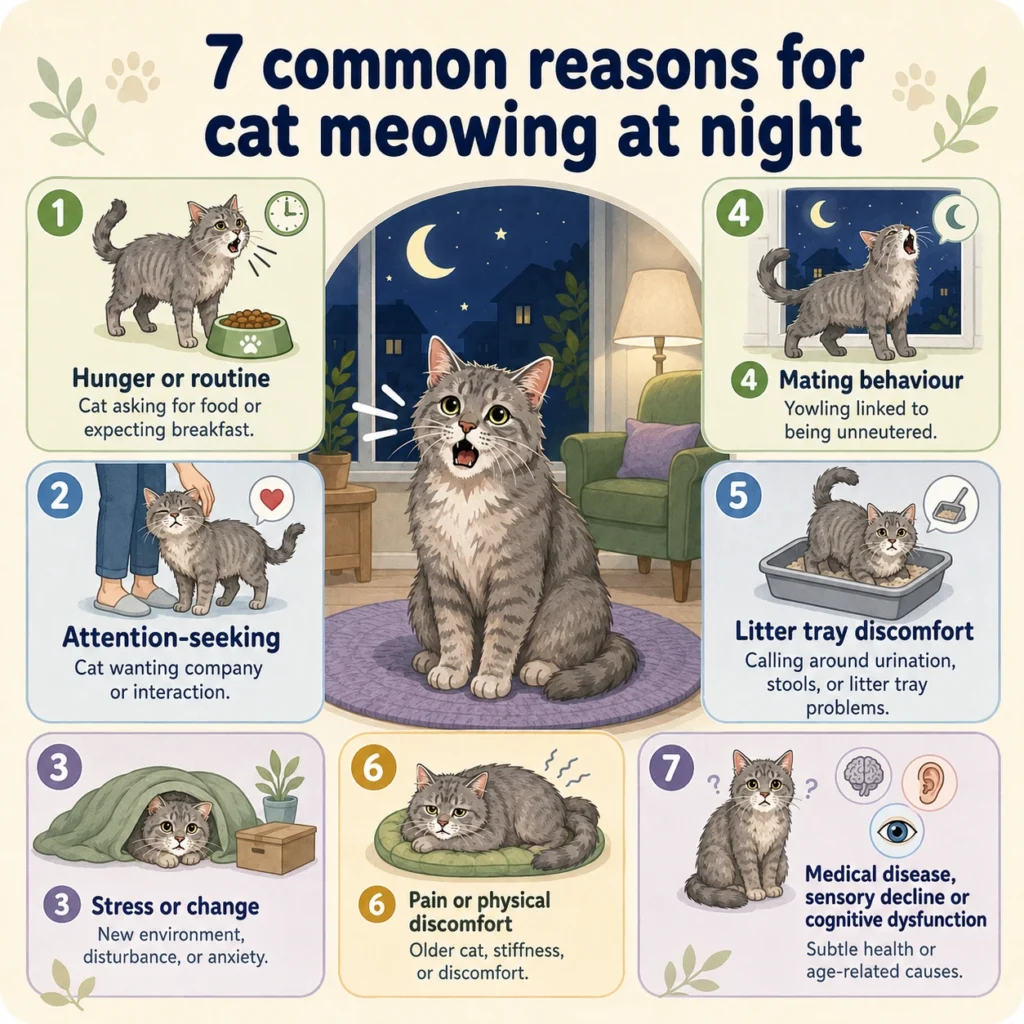
Cats are often described as crepuscular, meaning they tend to be most active around dawn and dusk. Their sleep–wake pattern does not always match that of a human household.
A cat that sleeps for much of the day may become alert just as everyone goes to bed. Young cats can be especially energetic and may run, play, patrol the home or call for interaction during the early hours.
In this situation, cat meowing at night is usually accompanied by otherwise normal behaviour. Your cat remains bright, eats normally, uses the litter tray and settles after activity.
Try two or three short play sessions during the day, followed by a more active session in the evening. Toys that encourage stalking, chasing and pouncing can help satisfy normal predatory behaviour. The AAFP and ISFM environmental needs guidelines identify opportunities for play, safe resting places and appropriately positioned resources as important parts of a healthy feline environment.
Avoid forcing your cat to stay awake all day. The aim is to provide predictable outlets for energy rather than disrupt normal rest.
2. Boredom or insufficient enrichment
Indoor living protects cats from many dangers, but a quiet and repetitive home may provide too little stimulation.
A bored cat may sleep for long periods during the day and then seek activity when the household becomes quiet. It may meow outside a bedroom, scratch at doors, knock objects over or initiate play.
Environmental enrichment can reduce cat meowing at night by giving the cat more choice and control. Useful options include:
- Elevated resting places
- Window views
- Scratching surfaces
- Rotated toys
- Puzzle feeders
- Cardboard boxes or safe hiding places
- Short, predictable play sessions
Resources should be spread throughout the home rather than crowded into one area, particularly in multi-cat households. International Cat Care recommends providing safe places, separated resources and opportunities for natural feline behaviour when making a home more cat friendly.
Watch for conflict between cats. Blocking access to food, water, litter trays or sleeping areas can cause stress and vocalisation that becomes more noticeable at night.
3. Hunger, thirst or access to resources
Cats are naturally adapted to eating several small meals rather than one or two large meals. A cat fed early in the evening may become hungry before dawn, especially if it is young, active or accustomed to receiving food when it calls.
When feeding reliably follows the noise, the cat may learn that cat meowing at night is an effective way to obtain breakfast.
An automatic feeder can help separate food delivery from human attention. Set it to provide a measured portion shortly before the cat’s usual waking time while keeping the total daily calorie allowance unchanged.
Fresh water and easy access to a clean litter tray also matter. Senior cats or cats with reduced mobility may struggle to reach resources on another floor or step into a high-sided tray.
Do not assume that increased hunger or thirst is purely behavioural. A cat that eats more but loses weight may have hyperthyroidism or another medical condition. Increased drinking and urination may be associated with kidney disease, diabetes or other illness.
4. Learned attention-seeking
Cats quickly learn which behaviours produce a response. Getting up, speaking, opening a door, feeding the cat or even shouting may reinforce night-time calling.
Once established, cat meowing at night may temporarily become louder when the usual response stops. This is sometimes called an extinction burst: the cat tries harder because the behaviour previously worked.
Before treating the problem as a training issue, arrange a veterinary check when the behaviour is new, intense or occurring in an older cat. Pain and disease must not be overlooked.
When medical problems have been excluded, consistency is essential:
- Meet the cat’s needs before bedtime.
- Provide evening play and a small scheduled meal.
- Avoid rewarding vocalisation with food or attention.
- Reward calm behaviour at appropriate times.
- Keep the bedtime routine predictable.
Punishment is not recommended. It may increase fear or anxiety without teaching the cat what to do instead. The MSD Veterinary Manual guidance on behaviour problems explains why reinforcement, environmental management and predictable routines are central to behaviour modification.
5. Stress or environmental change
Cats rely heavily on familiar smells, locations and routines. Moving home, rearranging furniture, a new baby, visitors, another pet or a change in working hours may trigger anxiety.
Outdoor cats seen through a window can also provoke territorial calling. In multi-cat homes, subtle tension may continue even when there is no obvious fighting.
Stress-related cat meowing at night may occur alongside hiding, pacing, urine marking, overgrooming, reduced appetite or increased vigilance.
Try to identify what changed before the vocalisation began. Maintain regular feeding and play times, provide separate resources and make sure each cat has a safe place where it will not be disturbed.
A plug-in feline pheromone product may help some cats, but it should support rather than replace environmental changes or veterinary assessment.
Sudden behaviour change should not automatically be labelled as anxiety. Cats experiencing pain or sensory decline may also appear unsettled.
6. Pain or physical discomfort
Cats often conceal pain. Instead of obvious limping or crying when touched, they may stop jumping, sleep in different places, hesitate at stairs, groom less or become irritable. Although this guide focuses on dogs, many of the same observation principles apply when learning how to recognise subtle signs of pain in pets.
Arthritis is common in older cats and can make it difficult to settle comfortably. A high-sided litter tray, stairs or a jump onto the bed may become painful. Some cats pace and vocalise because they cannot find a comfortable position.
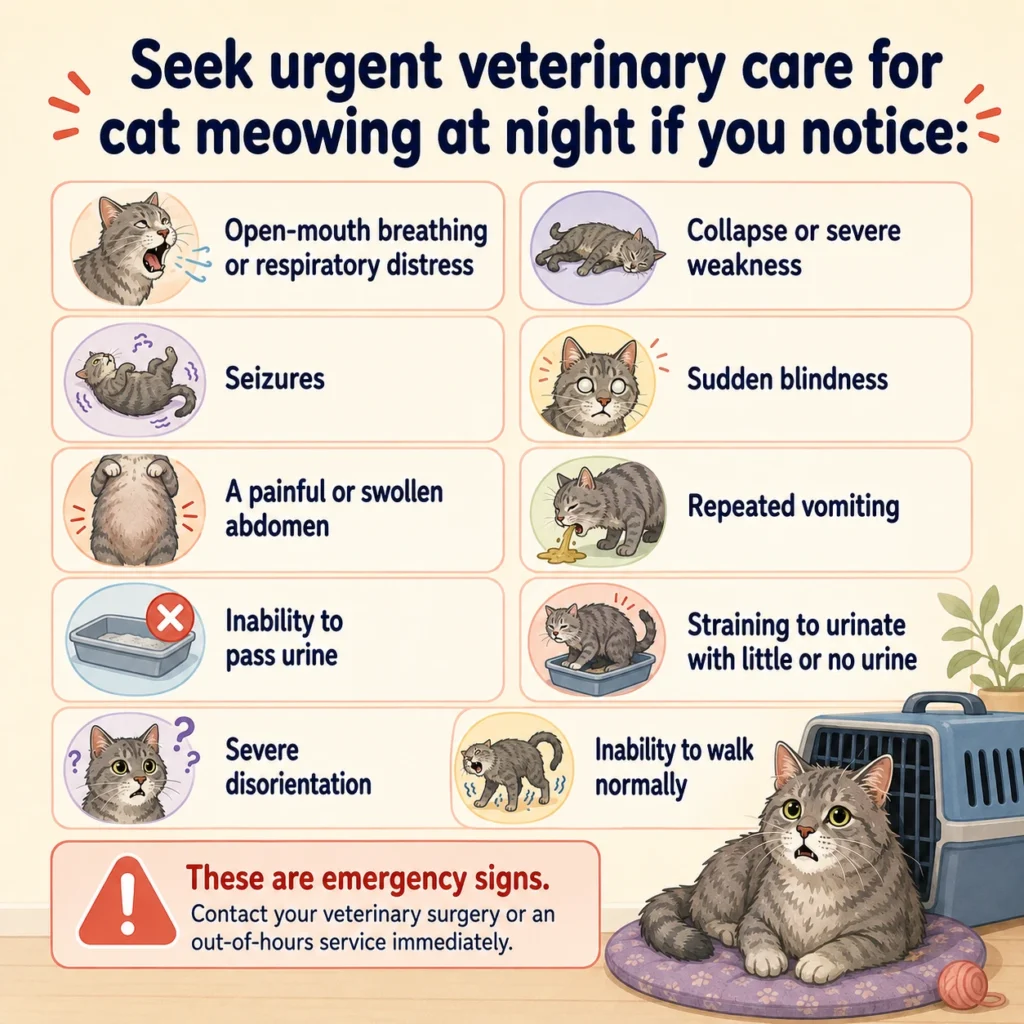
Dental disease, abdominal discomfort and urinary tract pain may also cause cat meowing at night. Vocalisation around the litter tray, repeated attempts to urinate, passing only small amounts of urine or licking the genital area require prompt attention.
A male cat that strains but produces little or no urine may have a urethral obstruction, which is an emergency.
Do not give ibuprofen, paracetamol or another human painkiller. Many human medicines are dangerous to cats.
7. Medical disease, sensory decline or cognitive dysfunction
In an older cat, new cat meowing at night deserves a medical assessment even when the cat appears well during the day.
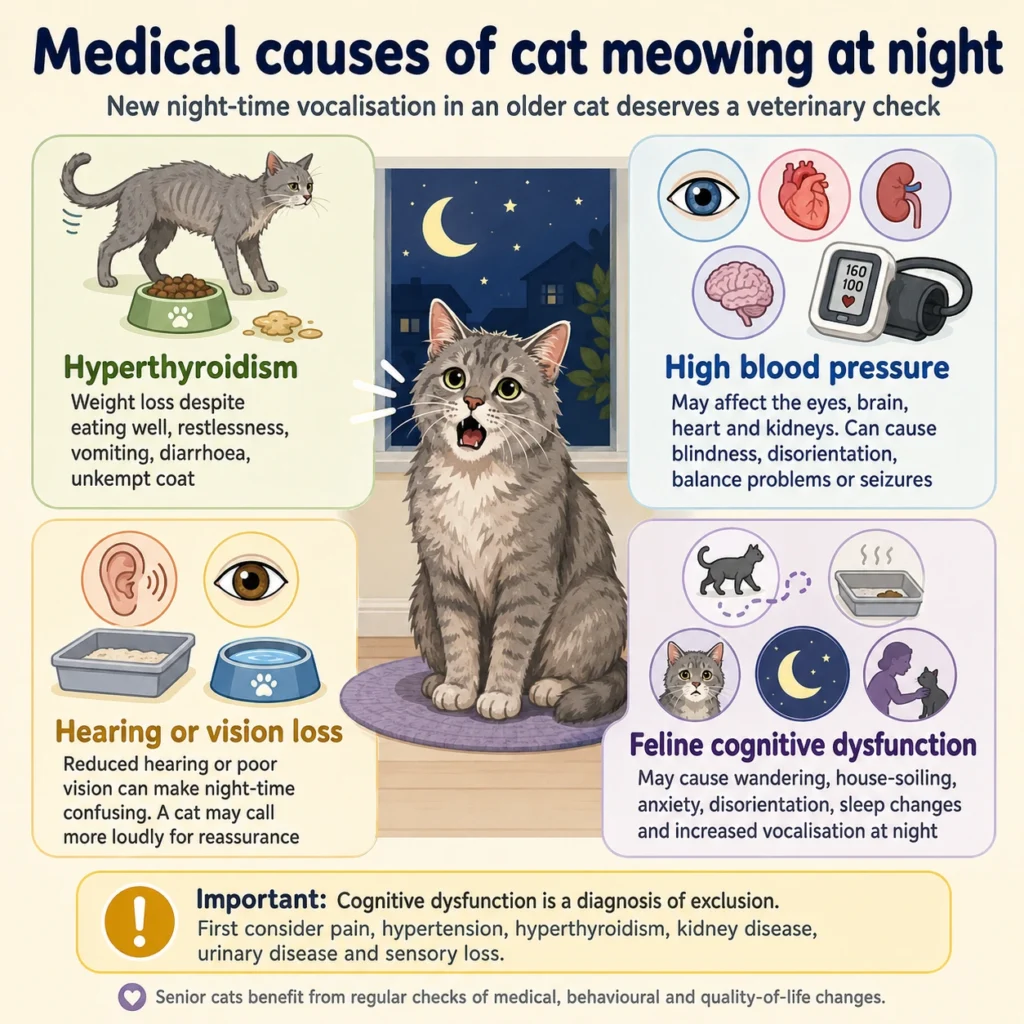
The 2021 Feline Senior Care Guidelines support regular assessment of medical, behavioural and quality-of-life changes in ageing cats.
When should cat meowing at night be checked by a vet?
Arrange a veterinary appointment when the vocalisation:
- Begins suddenly
- Is becoming more frequent or intense
- Occurs in a cat aged around ten years or older
- Continues despite appropriate enrichment and routine changes
- Is accompanied by weight loss
- Occurs with increased thirst or urination
- Is associated with reduced mobility or difficulty jumping
- Happens while using the litter tray
- Occurs with vomiting, diarrhoea or reduced appetite
- Is accompanied by confusion, pacing or altered sleep
- Comes with changes in vision or hearing
Persistent cat meowing at night is not something to punish. It is information that the cat’s physical, emotional or environmental needs may not be fully met.
The bottom line
Cat meowing at night may reflect normal feline activity, boredom, hunger or a learned request for attention. It may also be the first visible sign of pain, urinary disease, hyperthyroidism, hypertension, sensory decline or cognitive dysfunction.
Age and sudden change matter. A young cat that is energetic and otherwise healthy may benefit from more daytime enrichment and a structured evening routine. A senior cat that suddenly begins yowling or acting confused needs a veterinary assessment.
Do not dismiss new cat meowing at night as spite or normal ageing. Finding the cause is the safest way to improve both your cat’s welfare and the household’s sleep.
Frequently asked questions
Why is my cat meowing at night but seems fine?
Your cat may be active, bored, hungry or seeking attention. Monitor appetite, weight, drinking, mobility and litter tray use. Arrange a veterinary check if the behaviour is new, persistent or occurs in a senior cat.
Why is my old cat meowing at night?
Pain, hearing or vision loss, high blood pressure, hyperthyroidism and cognitive dysfunction are important possibilities. Older cats should be examined rather than assumed to be vocal because of normal ageing.
Should I ignore cat meowing at night?
Only after medical problems and unmet needs have been considered. Ignoring may be appropriate for established attention-seeking, but it is unsafe when the behaviour is new, distressing or accompanied by other changes.
Can hunger cause cat meowing at night?
Yes. Cats may become hungry before dawn, particularly when their final meal is early. A measured late meal or automatic feeder may help without teaching the cat that waking you produces food.
How do I stop cat meowing at night?
Provide daytime enrichment, evening play, a measured meal and easy access to water and a clean litter tray. Keep the routine consistent. Veterinary assessment is needed when the behaviour persists or warning signs are present.
Is cat meowing at night a sign of dementia?
It can be one sign of feline cognitive dysfunction, particularly when accompanied by disorientation, altered sleep, wandering, house-soiling or changes in social behaviour. Other medical causes must be ruled out first.