


When pet owners search for dog probiotics diarrhea, they are usually looking for a safe way to settle their dog’s stomach and improve loose stools. Probiotics may help in some cases, but they are not an instant cure and do not replace veterinary care when a dog is unwell.
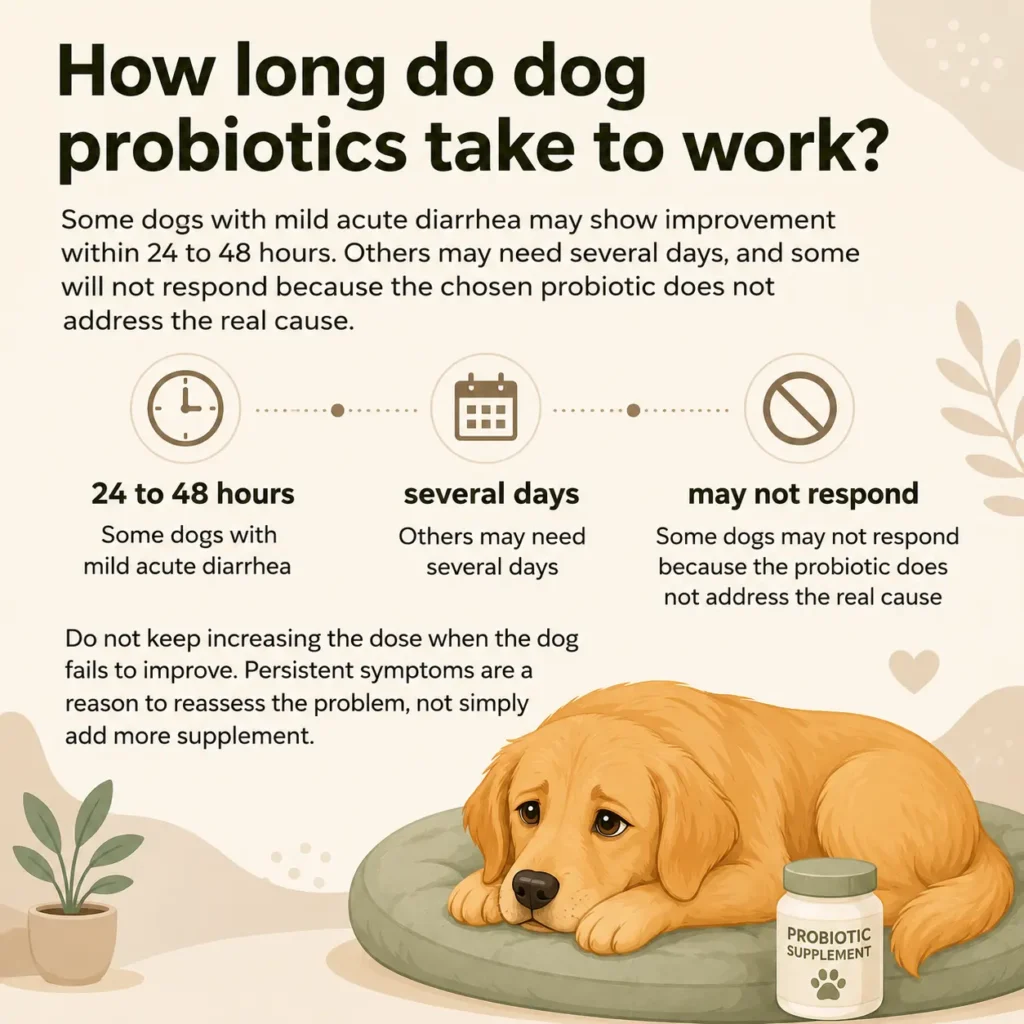
Clinical studies suggest that certain probiotic and synbiotic products can modestly shorten the duration of acute diarrhea. However, the results depend on the strain, formulation, product quality and underlying cause. Other studies have found little difference between probiotics, metronidazole and placebo, partly because many uncomplicated cases of acute diarrhea improve on their own.
Here are seven practical, evidence-based facts to help you decide when a probiotic may be useful and when your dog needs more than a supplement.
Table of Contents
1. Dog Probiotics Diarrhea: Some Products May Shorten Recovery
Acute diarrhea often starts suddenly and usually lasts only a few days. Common triggers include a sudden food change, eating rubbish, stress or a mild digestive upset. For pet owners researching dog probiotics diarrhea, the main question is whether a supplement can speed up recovery.
Because many dogs improve naturally, controlled trials are important. In a double-blinded multicentre study, 148 client-owned dogs were recruited from 14 veterinary practices in the UK and Ireland. A multi-ingredient probiotic paste reduced median diarrhea duration from 47 hours with placebo to 32 hours, and fewer dogs needed additional treatment.
Another trial found that a specific canine-derived strain of Bifidobacterium animalis helped dogs with acute idiopathic diarrhea recover more quickly than placebo. However, a separate study comparing probiotics, metronidazole and placebo found no statistically significant difference in recovery time.
The useful takeaway is simple: a well-chosen probiotic may help some dogs recover a little faster, but the improvement is usually measured in hours or days, not minutes.
2. Probiotics cannot treat every cause of diarrhea
Diarrhea is a symptom rather than a diagnosis. When considering dog probiotics diarrhea, it is important to remember that a probiotic may support the gut, but it cannot remove a swallowed object, correct severe dehydration or treat a serious infection.
Possible causes range from minor to urgent. A dog may develop diarrhea after eating unfamiliar food, picking up parasites, experiencing stress or reacting to medication. More serious causes include pancreatitis, toxin exposure, gastrointestinal obstruction, chronic enteropathy and severe viral or bacterial disease.
This is why your dog’s general condition matters more than stool appearance alone. One soft stool in an otherwise bright and active adult dog is very different from repeated watery diarrhea in a puppy that is vomiting and refusing water.

A probiotic may be reasonable as part of supportive care when a dog remains alert, hydrated and interested in food. It should not be used to delay veterinary assessment when the dog is deteriorating.
3. Probiotic effects are strain-specific
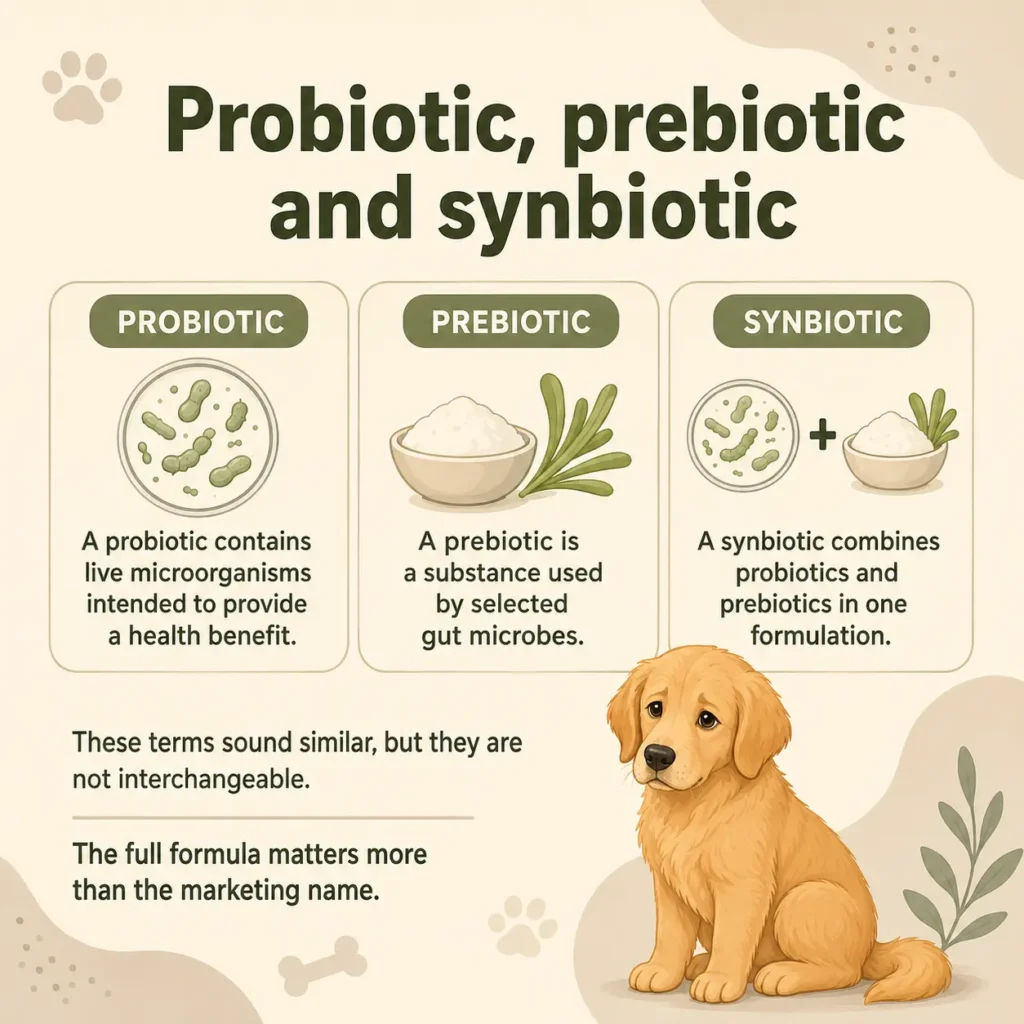
“Probiotic” is a broad term covering many bacteria and yeasts. They do not all work in the same way.
A product’s effect depends on the exact strain, not simply the species name printed on the front of the pack. The organism must also survive storage, stomach acid and bile before reaching the intestine in a useful quantity.
For example, evidence supporting one strain of Bifidobacterium animalis cannot automatically be applied to every product containing Bifidobacterium. The same applies to Enterococcus faecium, Lactobacillus species and probiotic yeasts.
A good label should identify the genus, species and strain. It should also state the number of colony-forming units, or CFU, and explain whether this amount is guaranteed until the expiry date.
A very high CFU count does not automatically mean a better product. A lower-dose probiotic supported by clinical research in dogs may be more useful than a product with billions of organisms but no clear strain information or evidence.
4. Antibiotics and probiotics affect the gut differently
Metronidazole has often been prescribed for canine diarrhea, even without evidence of a bacterial infection. Current antimicrobial stewardship guidance increasingly recommends against routine antibiotic use in mild, uncomplicated cases.
Antibiotics can affect helpful bacteria as well as potential pathogens. Studies in dogs have shown that metronidazole may increase gut dysbiosis and reduce bacterial groups involved in normal bile acid metabolism. Some of these changes can continue after treatment has ended.
One important gut organism is Peptacetobacter hiranonis, previously called Clostridium hiranonis. It helps convert primary bile acids into secondary bile acids in the colon. These compounds form part of the gut environment that helps control opportunistic bacteria.
This does not mean antibiotics are always wrong. Dogs with sepsis, shock or another confirmed bacterial indication may need systemic antimicrobial treatment. The problem is using antibiotics automatically in dogs with mild, self-limiting diarrhea.
Probiotics and synbiotics are intended to support the gut environment rather than broadly suppress bacterial populations. Their benefits still vary by product, but they may offer a lower-risk supportive option in suitable cases.
Some bacterial probiotics may be affected by antibiotics if both are given at the same time. A vet may recommend separating the doses. The yeast Saccharomyces boulardii is different because antibacterial drugs do not directly kill it, although evidence from chronic gastrointestinal disease should not be applied to every case of short-term diarrhea.
5. Probiotics may support recovery without unnecessary antibiotics
Many pet owners understandably want to give their dog something when diarrhea starts. In the past, this expectation may have contributed to antibiotics being prescribed even when they were unlikely to provide a meaningful benefit.
Current evidence suggests that uncomplicated acute diarrhea often responds to supportive care. This may include maintaining hydration, feeding an appropriate highly digestible diet, controlling nausea when necessary and monitoring the dog closely.
A suitable probiotic may be part of that plan, but it should not become another automatic treatment used without considering the cause and severity of the diarrhea.
| Clinical situation | Possible role of probiotics | What the owner should do |
|---|---|---|
| Mild, short-term diarrhea in a well adult dog | May provide modest support | Monitor appetite, energy and hydration |
| Diarrhea after a sudden food change | May support recovery alongside diet management | Return to an appropriate diet and observe |
| Diarrhea during or after antibiotic treatment | Depends on the strain and timing | Ask a vet about product choice |
| Repeated vomiting, weakness or dehydration | Probiotic alone is not appropriate | Arrange prompt veterinary assessment |
| Persistent or recurring diarrhea | Limited value without a diagnosis | Investigate the underlying cause |
The goal is not to replace one unnecessary treatment with another. It is to choose an approach that matches the dog’s actual condition.
6. Probiotic product quality varies considerably
Not every veterinary probiotic contains what the label claims.
Studies have identified products with incorrect bacterial names, lower viable counts than stated and, in some cases, no detectable live organisms. Some products did not provide enough information to identify the strain at all.
That matters because a probiotic needs to contain the correct organism in a meaningful quantity to have a plausible effect. The word “probiotic” on the label is not enough.
| Label detail | Why it matters |
|---|---|
| Full genus, species and strain | Probiotic effects are strain-specific |
| CFU guaranteed through expiry | The count may fall during storage |
| Clear storage instructions | Heat and moisture can reduce viability |
| Evidence from studies in dogs | Human evidence may not apply directly |
| Specific, realistic claims | “Cure-all” claims are a warning sign |

Storage conditions are easy to overlook. Heat, moisture and poor handling can reduce the number of live organisms. Even a well-studied strain is unlikely to work as intended if most of the cells are no longer viable.
Be cautious with products claiming to treat diarrhea, allergies, inflammatory bowel disease, skin disease and behavioural problems at the same time. Those claims are broader than the current evidence supports.
7. Probiotics are usually well tolerated, but not completely risk-free
Most healthy dogs tolerate reputable probiotics without serious problems. Some may experience temporary gas, mild abdominal discomfort or a brief change in stool frequency after starting a new product.
Diarrhea may occasionally appear worse. This can happen because the dose is unsuitable, the product contains an ingredient the dog does not tolerate or the original disease is continuing to progress.
Extra caution is needed in dogs that are critically ill, septic, severely immunocompromised or recovering from major intestinal surgery. Serious probiotic-related complications appear uncommon, but products containing live microorganisms should not automatically be considered risk-free in vulnerable patients.
Human probiotics are not always suitable for dogs. They may contain different doses, flavourings or sweeteners that have not been assessed for canine use. Products containing xylitol must never be given to a dog.
Can probiotics make diarrhea worse?
They can occasionally contribute to digestive changes, particularly when introduced suddenly or given at an unsuitable dose. However, worsening diarrhea may also mean that the underlying illness is becoming more serious.
Stop the product and contact a veterinary professional if your dog develops repeated vomiting, marked lethargy, facial swelling, breathing difficulty or rapidly worsening gastrointestinal signs.
How to choose a probiotic for a dog with diarrhea
Look for a canine product with clear strain identification, an expiry date, suitable storage instructions and a viable count guaranteed through expiry. Products supported by published research in dogs are generally more credible than those relying only on customer testimonials.
The formula should also suit the clinical situation. A paste containing probiotics, prebiotics and intestinal adsorbents is not the same as a capsule containing one bacterial strain.
“Natural” does not automatically mean effective or safe. Evidence, quality and suitability for the individual dog matter more than branding.
When diarrhea is severe, recurring or accompanied by other signs, choosing a probiotic should not be the first priority. The dog needs a diagnosis.
The bottom line
Dog probiotics may provide useful support in selected cases of acute diarrhea. The best evidence applies to specific strains and formulations rather than probiotics as a whole.
Some studies suggest that probiotics or synbiotics can modestly shorten diarrhea or reduce the need for further treatment. Other studies show little difference from placebo, so the benefits should not be overstated.
Check your dog’s overall condition before focusing only on the stool. Mild diarrhea in an otherwise well adult dog may be monitored with appropriate supportive care. Repeated vomiting, weakness, dehydration, severe blood loss or persistent symptoms require veterinary assessment.
A probiotic should be selected for its strain, evidence and quality, not simply because the packaging promises better gut health.
Need quick information about a veterinary medicine? Use the HelloVet Quick Drug Lookup for a simple overview of common uses, precautions and side effects.